
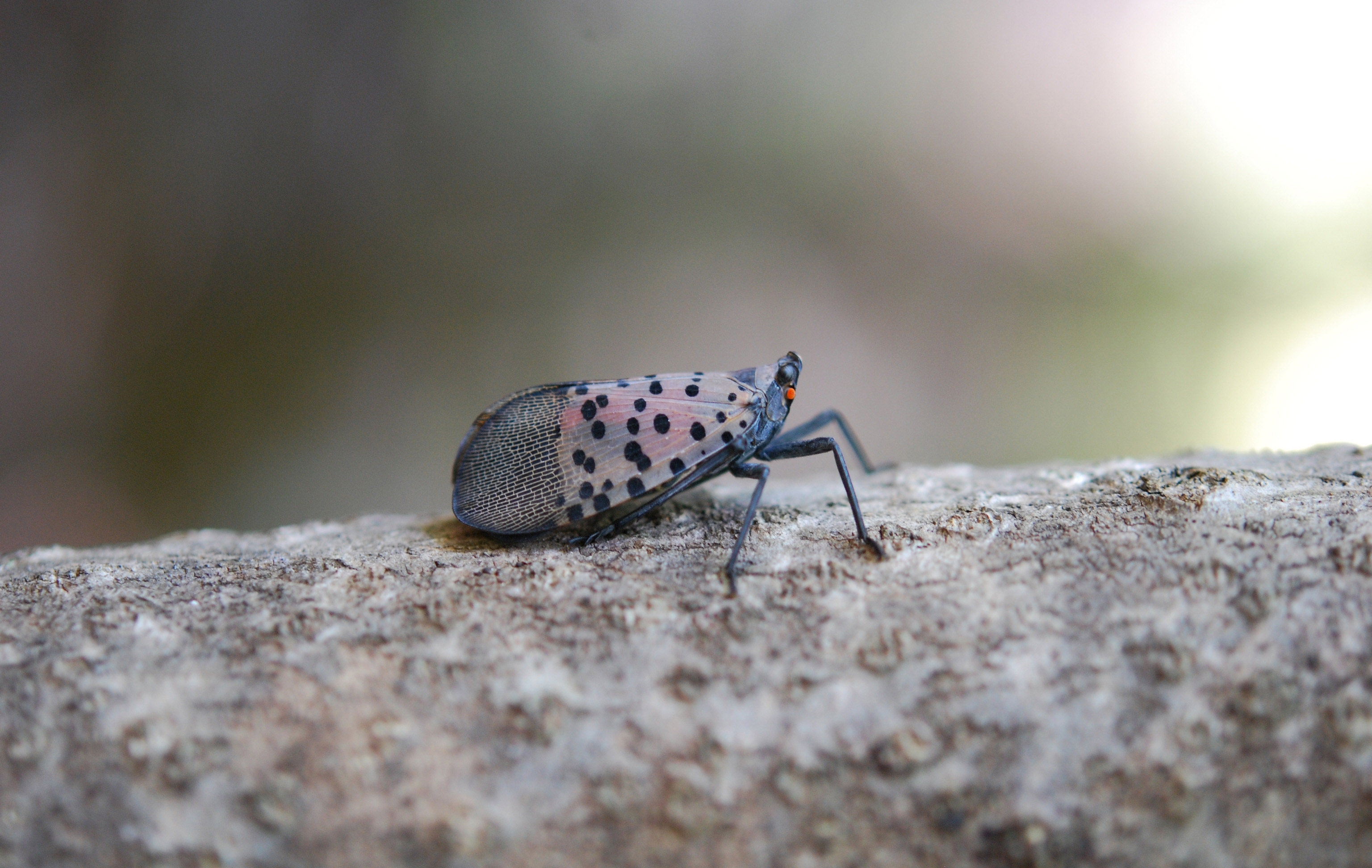
They don’t look dangerous, do they? With their daintily spotted wings and bright red undersides.
But these critters are DESTRUCTIVE. They pose a huge threat to Pennsylvania agriculture, including the grape, tree-fruit, hardwood and nursery industries, which collectively are worth more than $18 billion to the state’s economy.
The Pennsylvania Department of Agriculture and U.S. Department of Agriculture have partnered in fighting this invasive species, and they’re asking for our help, too. Here’s what you can do:
KILL ON SIGHT. Adults and nymphs gather in large numbers on host plants. During the day, they tend to cluster near the base of a tree or plant, and at dusk they begin migrating up the trunk and might be more visible. Whether you see one or a cluster, kill as many as you can.
REPORT ANY SIGHTINGS. Once you’re done crushing those suckers, visit the Pennsylvania hotline (888-422-3359) or go online to report a spotted lanternfly sighting on the PennState Extension’s designated website so they can track the activity and notify the appropriate state or federal agency.
LOOK BEFORE YOU LEAVE. If you live in or have traveled through a quarantined area, look for the insect before leaving, especially after walking or parking near a tree line. The spotted lanternfly isn’t a strong flier, but it can still hitch rides on clothes, cars, or other items that are typically found outdoors.
The following cities are in the official quarantine zone, and I suspect York County will be joining this list soon, as sightings are taking place across the Susquehanna now as well, according to the York Daily Record.
- Berks
- Bucks
- Carbon
- Chester
- Dauphin
- Delaware
- Lancaster
- Lebanon
- Lehigh
- Monroe
- Montgomery
- Northampton
- Philadelphia
- Schuylkill
Visit the PA Department of Agriculture online for more details about how homeowners and residents can protect their communities from this destructive species.
 Hike PA